Solar Carport Installation — UK Turnkey Installers
A solar carport is a steel structure first and a solar array second, so the installation is the hard part — not the panels. We are MCS-certified turnkey installers: structural design, foundations, steel erection, electrical works, the Class OA planning route and the DNO grid connection, all handled end to end, with the car park phased to stay open.
- MCS-certified
- Structural sign-off
- Class OA handled
- G99 managed
- MCS-certified installs
- NICEIC / NAPIT electrical
- BS EN 1991 wind & snow loading
- BS EN 1993 steelwork
- BS 7671 (18th Edition)
- CDM 2015 construction
Installed by MCS-certified, NICEIC / NAPIT-registered contractors · structural design signed off to Eurocode loading · insurance-backed workmanship warranty · no-obligation, email-first feasibility · SEO Dons Ltd, Companies House 16766013
QUICK ANSWER
Installing a solar carport — what it costs and what's actually involved
Installed solar carports run from about £6,000 to £12,000 per parking space (ex VAT), or roughly £1,100 to £1,600 per kWp at commercial scale — two to three times rooftop solar, because the hot-dip galvanised steel structure and foundations are 40 to 50 per cent of the job. The install is a construction project, not a panel swap: a site survey, structural and electrical design, the Class OA prior-approval application (England) and a DNO G99 grid connection, then groundworks and foundations, steel erection, the PV and any EV charging, and commissioning to MCS and BS 7671. Expect roughly 2 to 3 months from go-ahead to energised, with 1 to 3 weeks on site for a commercial scheme — phased bay-by-bay so the car park keeps trading.
- The steel is the cost, and the reason it beats rooftop where the roof is full — it also carries the EV charging you have to install anyway.
- The grid connection, not the build, is usually the long pole. A commercial array needs G99 DNO pre-approval, often 8-16 weeks — we start it on day one.
- No phone tag. Try the install-cost estimator below, then request a feasibility when you're ready.
Turnkey carport installer vs a general contractor vs a steel-frame supplier
| Turnkey installer (us) Structure + PV + grid, one contract | General M&E contractor Electrical, sub-lets the steel | Steel-canopy supplier only Ships a frame, panels are your problem | |
|---|---|---|---|
| Structural design & sign-off to BS EN 1991/1993 | Sub-let | ||
| Foundations engineered to a ground survey | Sometimes | Generic | |
| MCS certification (needed for SEG eligibility) | |||
| Class OA / Class 9M prior approval prepared | |||
| DNO G98/G99 grid connection managed | Sometimes | ||
| PV, inverters & EV charging installed | |||
| One contract, one point of accountability |
A solar carport sits across three trades — structural steel, groundworks and MCS-certified PV — plus a DNO connection. Split it between a frame supplier and an electrician and the gaps between them become your risk. We hold the whole scope, which is also who you call in year eight. See exactly how we install one →
INDICATIVE INSTALL-COST ESTIMATOR
Rough out the cost, generation and payback of your carport install
A back-of-envelope model for a commercial solar carport install. It runs entirely in your browser — nothing is sent anywhere. Every figure is indicative and ex VAT; the real numbers come from a site survey and your half-hourly meter data.
Rough model only, at a UK yield of ~920 kWh/kWp. It excludes your DNO grid-connection cost, any EV-charging revenue, and the 100% AIA + 50% first-year tax relief that shortens real payback — and it assumes commercial 20% VAT (recoverable). Commercial export is usually a negotiated PPA, not a flat rate. See the full install cost breakdown, then request a fixed-price feasibility for the real numbers.
Get the real numbers — request a feasibility →A solar carport is a steel structure you build, not a roof you reuse
Rooftop solar bolts onto a roof that already carries its own load. A carport has none of that for free: every column, beam and foundation has to be engineered to BS EN 1991 wind and snow loading, founded on concrete footings or helical screw piles chosen from a ground survey, erected as a galvanised steel frame, then wired and commissioned to BS 7671 and MCS. That is why the structure alone is 40 to 50 per cent of the cost — and why an installer who only fits panels, or a supplier who only ships a frame, leaves the hardest half of the job to someone else.
Because the structure drives everything, so does the ground and the grid. Ground conditions decide the foundation, which decides both the disruption and the price; the DNO connection decides the programme. A commercial array almost always exceeds the G98 threshold, so it needs a G99 pre-approval — often 8 to 16 weeks — which is why we lodge it on day one and run it in parallel with fabrication, not after it.
- Structural design and a named engineer sign-off before any steel is cut
- Foundation engineered to your ground — screw pile, footing or ballast
- The DNO G99 connection started on day one, run in parallel
- One MCS-certified team across steel, PV, electrical and grid
Solar carport installation, by the figures
From survey to commissioning in roughly 2-3 months
A clear, no-pressure programme. The consents and the grid connection run in parallel with fabrication, so paperwork never becomes the bottleneck.
- 01Week 1-4
Survey, design & fixed quote
On-site survey — bay count, ground conditions, grid capacity — then structural and electrical design and a line-item fixed quote (per space and per kWp).
- 0256-day + 8-16 wks, parallel
Consents & DNO connection
We submit the Class OA prior approval (England) or Class 9M (Scotland) and the DNO G99 grid application, and run them in parallel.
- 031-3 weeks on site
Groundworks & steel erection
Foundations set to your ground survey (screw pile, footing or ballast), then the galvanised steel frame and canopy, phased bay-by-bay.
- 04Days; then O&M
Electrical, commissioning & handover
PV, inverters, any EV charging and battery, then testing, DNO witness and MCS certification, with monitoring live and warranties handed over.
Six sectors, six install challenges
A supermarket, an NHS trust, a school and a fleet depot are four different install problems that happen to share a car park. Pick yours.
Retail and Supermarket Car Park Installation
250-1,000+ kWp. 8-year payback. £300k-£1.5m+ ex VAT.
Workplace and Office Car Park Installation
50-500 kWp. 8-year payback. £100k-£600k ex VAT.
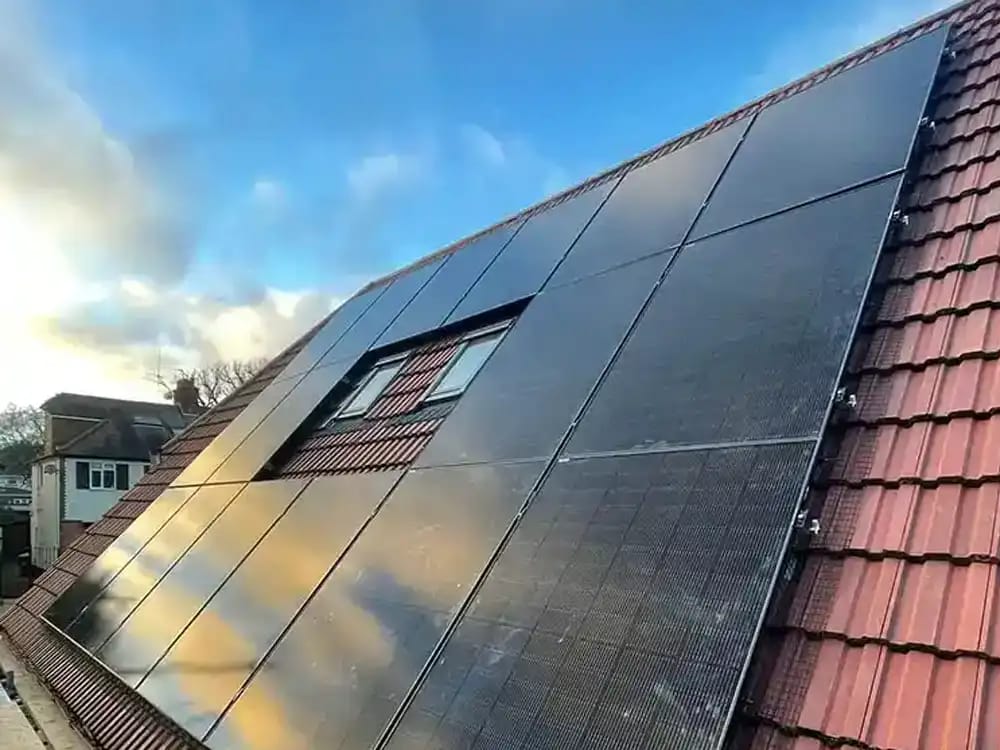
NHS, Healthcare and Public-Sector Installation
100-750 kWp. 9-year payback. £150k-£1m+ ex VAT.
Education (Schools, Colleges and Universities) Installation
50-500 kWp. 9-year payback. £100k-£600k ex VAT.
Industrial, Warehouse, Logistics and Fleet-Depot Installation
250-2,000+ kWp. 8-year payback. £300k-£2m+ ex VAT.
Residential and Small-Commercial Carport Installation
2-10 kWp. 9-year payback. £8k-£25k inc VAT.
320 kW solar carport installed at a supermarket over a trading car park
A large out-of-town supermarket with a 210-space surface car park, trading seven days a week, with no roof space left after an earlier rooftop install and growing customer EV demand. Delivered under the Class OA prior-approval route with a glare study, on helical screw-pile foundations, and phased bay-by-bay so most of the car park kept trading throughout. Illustrative example.
GRANTS & TAX, HONESTLY
Less capital grant than the marketing implies — but a genuinely strong tax position
Here's what actually applies to a commercial carport install in 2026. Take your own tax advice; we'll give your accountant the figures.
AIA + 50% first-year allowance
Solar PV is a special-rate asset, so it does not get full expensing. The correct 100% route is the Annual Investment Allowance (£1m/yr), then a 50% FYA on the balance for companies.
Workplace Charging Scheme
£500 per socket (75% of cost), up to 40 sockets, on the EV charging under the canopy — running to 31 March 2027. Workplace bays, claimed via an OZEV-authorised installer.
Business-rates exemption
On-site generation is exempt from business rates in England to 31 March 2035, so the carport does not raise your rateable value. Scotland and Wales are devolved.
VAT & export
Commercial buyers pay 20% VAT (recoverable) — the 0% rate is residential only. Surplus export is usually a negotiated PPA, not a flat SEG rate. Self-consume first; it's worth roughly double.
See the full 2026 grant & tax guide → · The capital-allowances detail →
STRAIGHT ANSWERS
The concerns car-park owners actually raise about the install
“It's two to three times rooftop — why bother?”
Because the roof is usually full, unsuitable or already used. A carport generates on land that earns nothing, shelters vehicles and carries EV charging you need anyway — and the per-kWp cost falls sharply as bay count rises. Where you have a good roof too, we'll tell you to do both.
“Will the install shut our car park?”
No. We phase it bay-by-bay and programme the disruptive stages — groundworks and steel — around your quiet periods. On-site time is typically 1-3 weeks for a commercial scheme; the only full outage is the final grid connection, a few hours, out of hours.
“Do we need full planning permission?”
In England, usually not — it's a Class OA prior-approval application, not full planning, and Scotland has its own Class 9M right. Wales and Northern Ireland still need full planning. We confirm your route at feasibility and submit whichever applies.
“Who's accountable for the steel in year eight?”
We are. One contract covers the structure, the PV and the grid, with a structural design signed off to Eurocode, hot-dip galvanising for a 25-year-plus life, separate written warranties and an optional O&M plan. No gaps between a frame supplier and an electrician to fall through.
Solar carport installation across the UK
Every region has a different network operator and a different planning authority. Click a city for its DNO region, local planning route and grid-connection timescales.

Solar carport installation, common questions
The questions we hear most from facilities, estates and finance teams.
How much does solar carport installation cost in the UK?
Installed solar carports typically run from about £6,000 to £12,000 per parking space (ex VAT), or around £1,100 to £1,600 per kWp at commercial scale, materially more than rooftop solar (£700-£1,050 per kWp) because the hot-dip galvanised steel structure and foundations are 40-50% of the job. Smaller structures run £1,200-£3,000 per kWp. As a guide, a 100-space commercial scheme is roughly £600,000-£1m ex VAT. Per-space cost falls as bay count rises, so larger car parks get materially better value.
How are solar carports installed, step by step?
There are eight stages: a free site survey and feasibility; structural and electrical design with a fixed line-item quote; the Class OA or Class 9M prior-approval application and the DNO G99 grid application (run in parallel); steel fabrication and procurement; groundworks and foundations; steel frame erection and canopy build; electrical works, testing and commissioning to MCS and BS 7671; and handover with warranties and an optional O&M plan. The consents and the grid connection run alongside fabrication so paperwork does not hold up the programme.
How long does a solar carport take to install?
Expect roughly 2-3 months from go-ahead to energised for a commercial scheme, and a few weeks for a domestic carport. On-site build time is typically 1-3 weeks for a commercial car park and 2-5 days for a driveway carport. The longest items are the Class OA prior approval (a 56-day statutory clock) and the DNO G99 grid connection (often 8-16 weeks), which we start on day one and run in parallel.
What foundations do solar carports need?
Two main options, chosen from a ground survey. Helical screw piles are steel piles driven into the ground, each supporting 2-plus tonnes; they suit around 90% of sites, install fast and leave no wet concrete, so the car park comes back into use quickly. Where the ground cannot be penetrated, over services, membranes or contaminated land, we use ballasted or concrete footings held by weight or mass. Both are engineered to BS EN 1991 wind and snow loads and confirmed by the survey.
Do solar carports need planning permission?
In England, usually not full planning. Since 21 December 2023, Class OA of the GPDO allows solar canopies over non-domestic off-street car parks under a prior-approval application rather than full planning, with a 56-day determination on siting, design and glare. Scotland has its own permitted-development right under Class 9M (in force 24 May 2024). Wales and Northern Ireland still need full planning. Full planning is also needed for listed buildings, scheduled monuments and canopies over 4m or within 10m of a dwelling. We prepare and submit whichever application applies.
Do we need a DNO grid connection for a solar carport install?
Almost always, yes. G98 fit-and-inform only covers systems up to 3.68kW per phase, so most commercial carports need a G99 pre-approval from your Distribution Network Operator before installation. The DNO review takes up to about 45 working days, often 8-16 weeks, and it is usually the longest single item in the programme, so we submit it on day one. EV charging adds load that we coordinate into the same application.
Will installing a solar carport disrupt our car park?
Only in phases. We sequence the install so most bays stay open, closing and reopening sections rather than the whole car park, and we programme the disruptive stages, groundworks and steel erection, around your quiet periods or out of hours. The only full outage is the final grid connection, typically a few hours, scheduled out of hours. For a domestic carport the driveway is usually usable within 2-5 days.
Why does solar carport installation cost more than rooftop solar?
Because a carport is a steel structure you build, not a roof you reuse. The columns, beams, canopy frame and foundations make up 40-50% of the total, which is why carports cost roughly two to three times rooftop per kWp. That fixed structural overhead is also why they get much better value at scale: a 250-space scheme spreads the steel cost across far more generating capacity than a 20-space one, pulling the per-kWp cost down toward the £1,100 floor.
WHY NOW (THE HONEST VERSION)
No countdown — just what's genuinely time-sensitive
Two real dates matter. The Workplace Charging Scheme's £500-per-socket rate runs only to 31 March 2027, so EV charging designed into the carport now captures it. And a DNO G99 connection often takes 8-16 weeks, so starting the feasibility now is what keeps a spring or summer install on track. The Class OA planning right itself is not going anywhere — it's a standing permitted-development right, not a scheme that closes — so there's no reason to rush a bad spec, only a reason to get the survey done properly.